
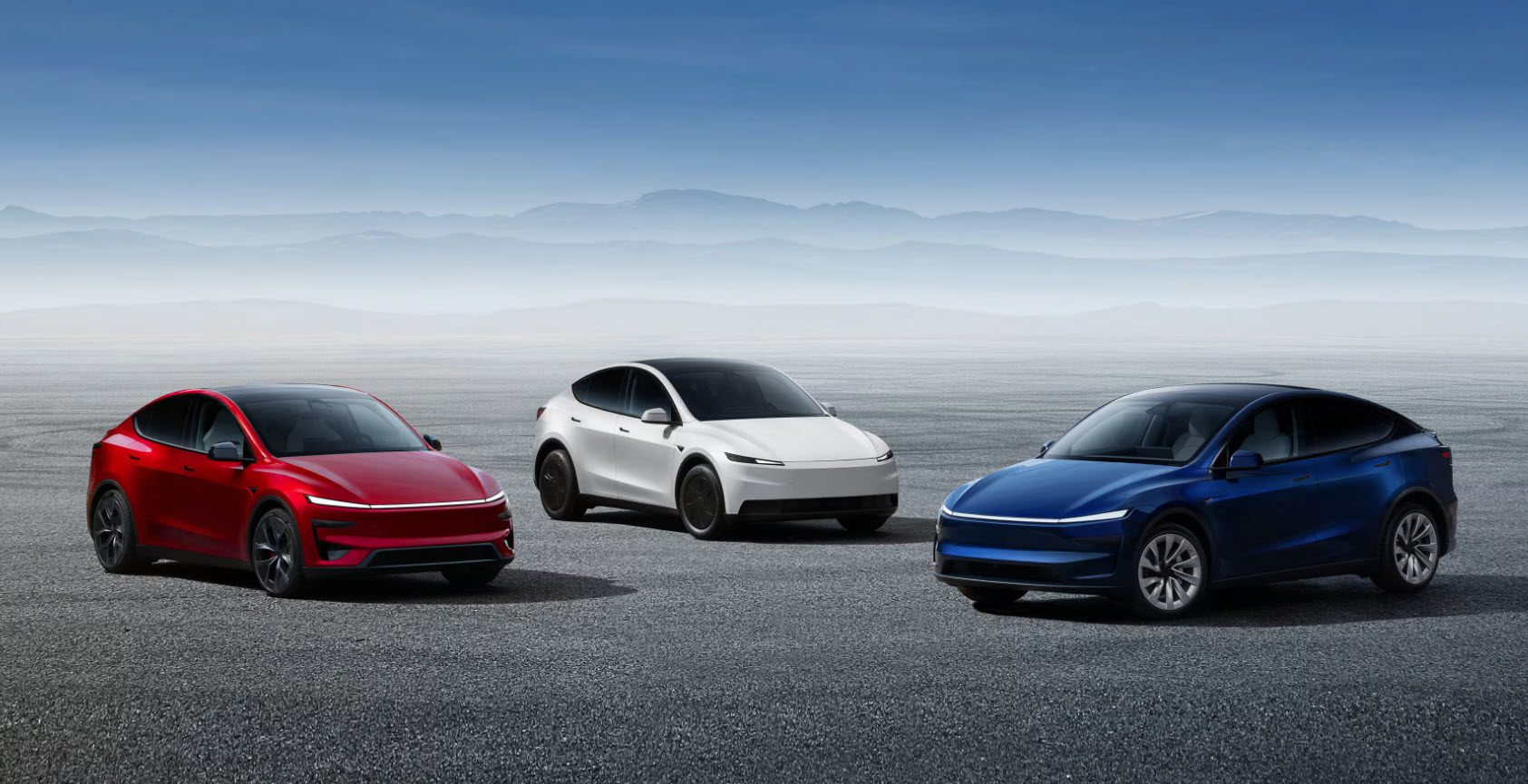
The 2025 model versions of the Kia EV3 and Tesla Model Y are among four new electric vehicles (EVs) that fail to live up to their advertised driving ranges in real-world testing recently conducted by the Australian Automobile Association (AAA), Australia’s peak motoring body.
The AAA earlier this year launched real-world EV testing under its Commonwealth-funded Real-World Testing Program, the first independent testing of real-world EV driving ranges in Australia and in Australian driving conditions.
All five cars tested were found to have real-world ranges below that of their manufacturers claims to the tune of anywhere between 5 to 23 per cent – including the 2024 Tesla Model 3 and Model Y and the 2023 BYD Atto 3.
New testing by the AAA published this week shows the trend continuing, with four new cars falling below their manufacturer’s advertised claims by between 3 to 31 per cent.
The four models tested included the 2025 models of the Kia EV3 and Tesla Model Y, the 2024 Smart #1, and the 2023 MG4.
Tesla’s 2025 Model Y performed closest to its laboratory test results, with a real-world driving range of 450 kilometres, down 3 per cent, or 16 kilometres, from what Tesla advertised. This is relatively in line with the results the AAA found earlier this year with the 2024 Tesla Model Y, which recorded an 8 per cent variation between lab and real-world.
The greatest variation between lab and the real world found in the AAA’s latest results was the 2023 MG4, which demonstrated a real-world range of only 281 kilometres, down 31 per cent on the 405 kilometres in the lab.
| MODEL | Category | Range Variation | Lab Range*(km) | RWT Range (km) | Energy Consumption Variation | Lab Energy Consumption*(Wh/km) | RWT Energy Consumption (Wh/km) |
| Kia EV3 2025 | Small SUV | -11% | 604 | 537 | +10% | 149 | 164 |
| MG4 2023 | Small car | -31% | 405 | 281 | +8% | 184 | 200 |
| Smart #1 2024 | Small SUV | -13% | 420 | 367 | +17% | 174 | 203 |
| Tesla Model Y 2025 | Medium SUV | -3% | 466 | 450 | -3% | 153 | 148 |
* Energy consumption and electric range figures quoted are reported in accordance with the Australian Government’s regulated standard, Australian Design Rule 81/02, and published on the Australian Government’s Green Vehicle Guide (greenvehicleguide.gov.au)
“These results give consumers an independent indication of real-world battery range, which means they now know which cars perform as advertised and which do not,” said Michael Bradley, AAA managing director.
“Giving consumers improved information about real-world driving range means buyers can worry less about running out of charge and make the switch to EVs with confidence”.
AAA’s is aiming to address consumer concern with EV driving range and recharging, with their own polling showing that 60 per cent of potential EV buyers naming these as their “main concerns or hesitations” preventing them from buying.
The AAA’s Real-World Testing Program has been operating since 2023, but before August of this year it focused exclusively on internal combustion and hybrid vehicles, finding 76 per cent of these cars used more fuel on-road than their advertised laboratory tests.

Joshua S. Hill is a Melbourne-based journalist who has been writing about climate change, clean technology, and electric vehicles for over 15 years. He has been reporting on electric vehicles and clean technologies for Renew Economy and The Driven since 2012. His preferred mode of transport is his feet.
