
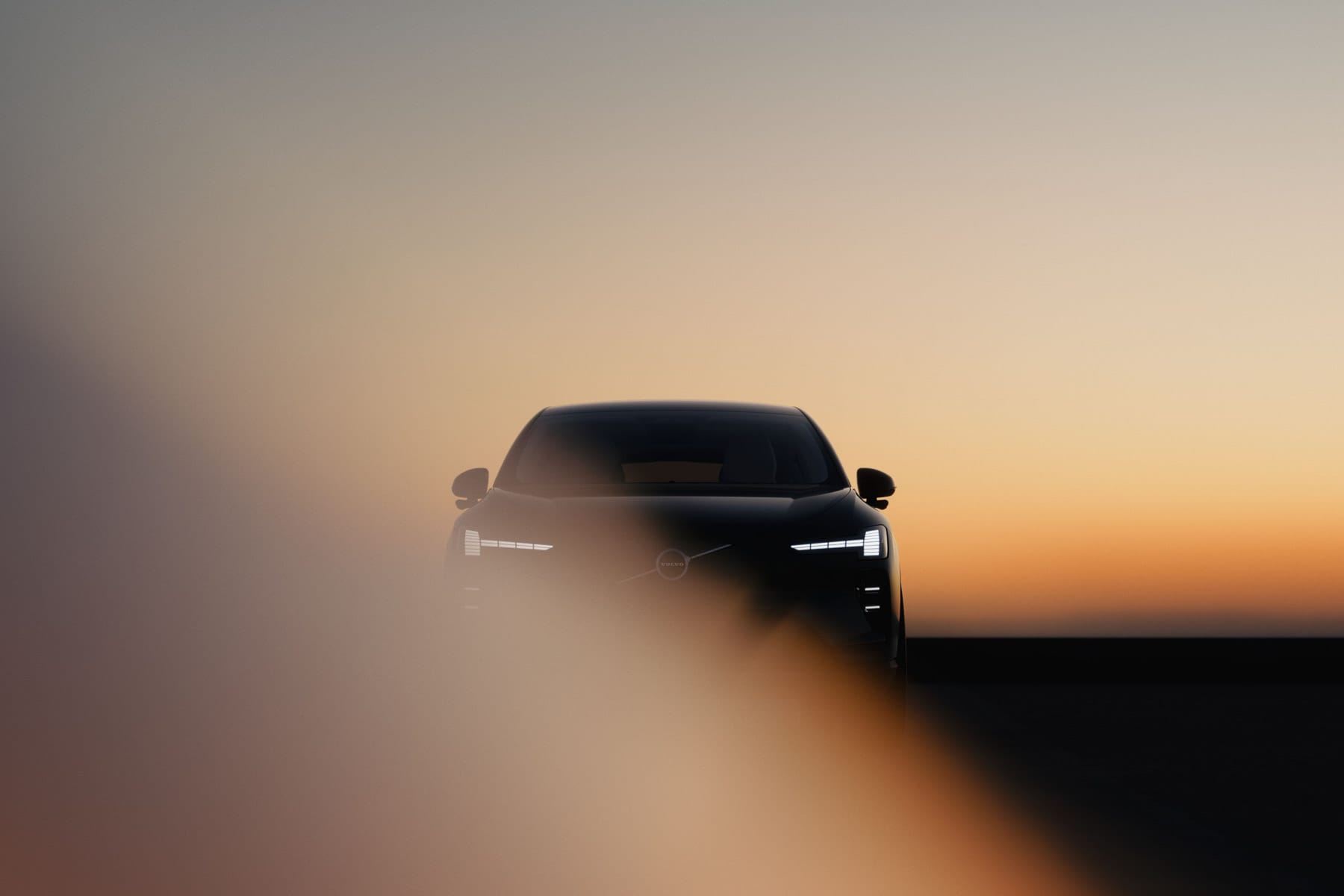
The EX60, built on Volvo’s electric SPA3 platform, will offer up to 810 kilometres of range, making it the longest-range battery-electric vehicle in the brand’s lineup. This figure was confirmed by the manufacturer around two weeks ahead of its world premiere. Notably, this is not a range-optimised single-motor version; the announcement refers to an all-wheel-drive model. However, the 810-kilometre figure remains a preliminary estimate, and Volvo has yet to disclose precise details about the battery’s energy content or the all-wheel-drive system. This information will be revealed at the world premiere.
As the XC60 and BMW X3 were already considered competitors in the internal combustion engine and hybrid segments, the new EX60 is poised to rival the BMW iX3, which BMW unveiled at the IAA Mobility last autumn. The iX3 50 xDrive, the first model of the Neue Klasse, features a 345 kW all-wheel-drive system and a WLTP range of 805 kilometres. To achieve this, the iX3 requires a battery with a net energy content of 108 kWh. While the Volvo EX60 currently boasts a slightly higher range based on preliminary data, no precise details about its powertrain efficiency are available yet. However, it is reasonable to assume that the Volvo’s battery will have a similar energy content. For comparison: the larger Volvo EX90, based on the SPA2 platform, is equipped with batteries offering 101 or 107 kWh of net energy content but achieves a maximum WLTP range of only 614 kilometres due to its size and weight.
The EX90 initially launched as a 400-volt electric vehicle, but will switch to an 800-volt system for the 2026 model year, while the SPA2-based sister model ES90 was introduced directly as an 800-volt electric vehicle. The EX60’s SPA3 platform also utilises an 800-volt electrical system, and according to Volvo’s preliminary announcement, it will charge faster than any previous Volvo electric vehicle. The manufacturer states that the EX60 “can gain up to 340 kilometres of range in just ten minutes when connected to a 400-kW fast charger.” However, this does not necessarily mean the charging power will reach 400 kW. What is clear is that it will likely exceed the ES90’s 350 kW charging capacity. Volvo has not yet disclosed the EX60’s charging time from 10 to 80 per cent; this information is expected to be revealed in two weeks. Additionally, Volvo confirms that the EX60 will achieve this charging performance “in all weather conditions,” indicating robust preconditioning.
These improvements are achieved through a series of measures that set the EX60 apart from the larger SPA2-based electric vehicles. For instance, a “new cell design of the EX60’s battery carefully balances energy density and power delivery, further increasing driving range.” The 800-volt electrical system and in-house developed software enable more efficient energy transfer during charging, reducing heat generation and the energy required for cooling. Lighter materials are also used in the charging system, though Volvo has not yet provided further details.

The battery (with an as-yet-unknown energy content) is integrated directly into the vehicle structure using Cell-to-Body technology, and the electric motors are developed in-house. All EX60 customers will receive a 10-year battery warranty. The Cell-to-Body battery is not the only structural innovation: the EX60 is the first production Volvo to utilise ‘Megacasting’ in its manufacturing process. This involves producing very large, precision-cast components in a single piece, replacing hundreds of smaller parts. This simplifies production by eliminating numerous assembly steps, and the Megacasting components are lighter than conventionally assembled parts, which in turn increases range.
“The EX60 is designed to be a gamechanger,” says Anders Bell, Chief Technology Officer at Volvo Cars. “With our new electric vehicle architecture, we directly address the main worries that customers have when considering a switch to a fully electric car. The result is class-leading range and fast charging speeds, marking the end of range anxiety.”
cision.com
