
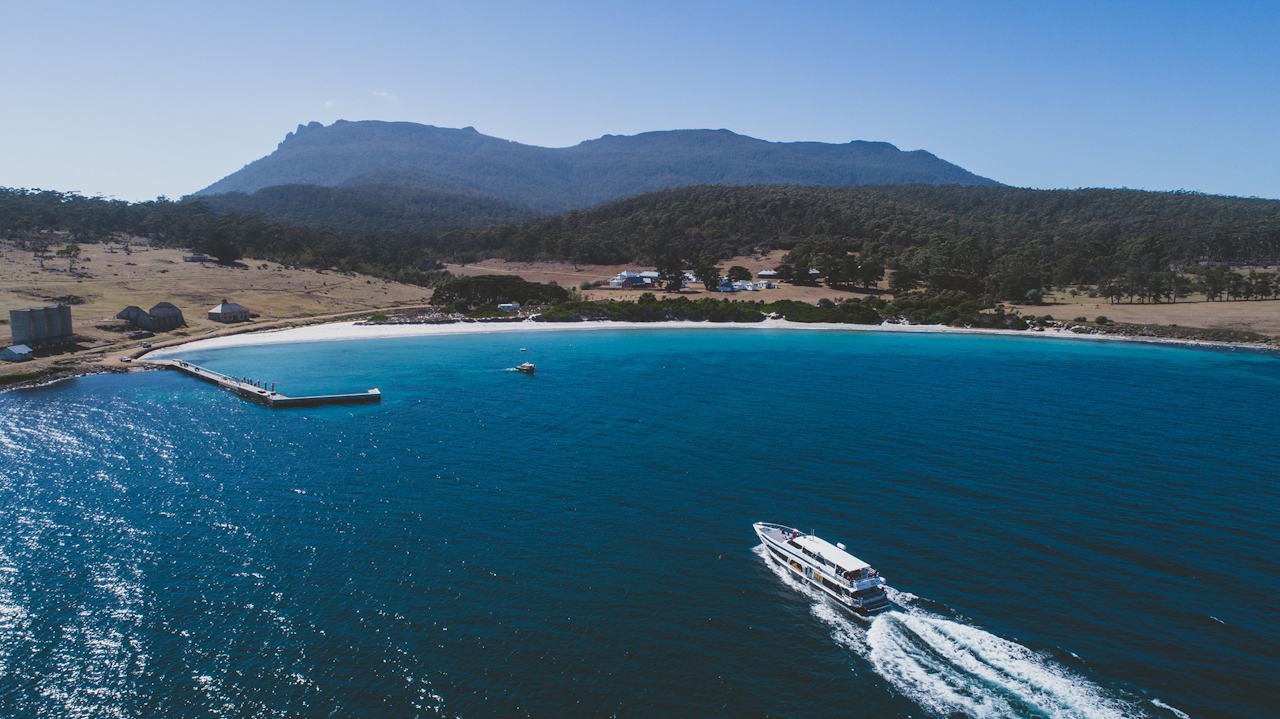
Visitors to Tasmania’s Maria Island will soon be travelling aboard an “eco-friendly” passenger ferry fuelled by so-called ‘green’ methanol that will be sourced from one of two biomass methanol projects in the state’s northwest.
Tasmania’s minister for energy and renewables Nick Duigan announced on Monday funding worth $650,000 to support local ferry operator Encounter Maria Island’s purchase of a new passenger ferry which will be fuelled by locally made methanol, largely from forestry wood waste.
Encounter Maria Island, which is part of the family run Navigators Group, has “spent years researching and examining options for future fuels for a ferry of this type and size”, according to John Roche, Navigators CEO.
He said who that “battery electric, or hydrogen fuel cell electric propulsion systems didn’t stack up for a variety of operational, technological, regulatory, and cost reasons.”
“First stage will be implementing a best practice, lowest emissions possible solution while green methanol engines and fuel becomes available. Once available, the vessel will be ready for the transition to future fuels.
“A vessel has a life of over 30 years, and we know that in this period diesel will not be the fuel of choice.”
The new ferry, which was not specified by the Tasmanian government’s Monday announcement, is expected to be operational by late-2026 to meet what is expected to be increased visitation for the Maria Island summer period.
It is unclear, however, just how soon the ferry will be able to live up to its “eco-friendly” label, given not only Roche’s comments but also the fact that green methanol for the ferry will be sourced from either the Bell Bay Powerfuels Project or the HIF Global E-fuels plant in Burnie, neither of which is yet operational.
The Bell Bay Powerfuels Project, set to be located in Bell Bay, on the River Tamar in Tasmania’s north, was last reported to be on track to begin production by 2028. Similarly, an update published in September gave a potential start of operation for the HIF Tasmania “as soon as 2030.”
The apparently eco-friendly nature of the vessel’s propulsion will also run up against inherent flaws in methanol production that relies on biomass.
Both projects will be relying on biomass residue recovered from Tasmania’s forestry plantations. In the case of the Bell Bay Powerfuels Project, their green methanol “will be produced from biomass sourced exclusively from sustainable certified plantations” which includes “forest floor residues and processing waste from the sawmills and wood chipping plants.”
And according to HIF, “residue biomass from the state’s sustainable forestry industry” is simply listed as “an option for the project’s CO₂ source”.
The Bob Brown Foundation recently protested against the proposed use of native forest wood chips in the methanol plant at Burnie, saying it would result in a significant increase in native forest logging.
Despite this, the Tasmanian government said that the project aligns “perfectly” with its Future Clean Fuels Strategy.
“This project pioneers green methanol fuel use and advances Tasmania’s reputation for clean fuel maritime technology,” said Duigan.
“Tasmania is charting a clean fuels future. This ferry has far lower emissions than diesel, which is why we’re supporting innovators like Encounter Maria Island to lead the way.
“Green methanol is an emerging solution for reducing global marine emissions. This project puts Tasmania on the map as one of the first regions in Australia to deploy it at scale.”

Joshua S. Hill is a Melbourne-based journalist who has been writing about climate change, clean technology, and electric vehicles for over 15 years. He has been reporting on electric vehicles and clean technologies for Renew Economy and The Driven since 2012. His preferred mode of transport is his feet.
