

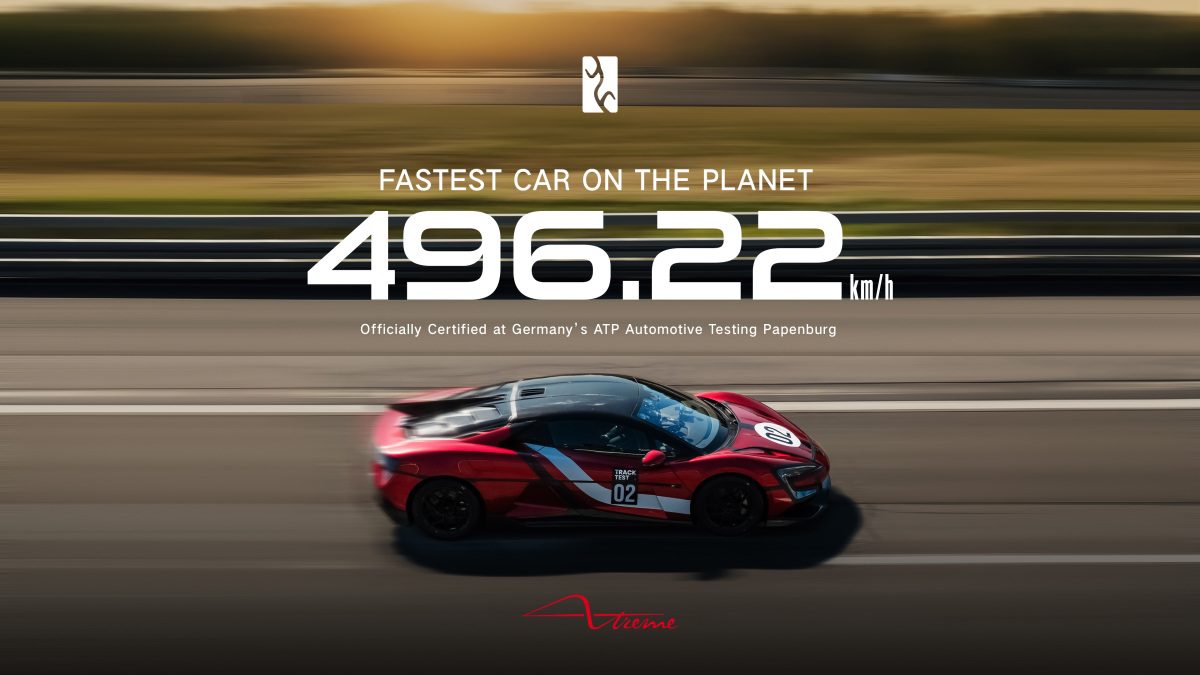
Chinese car giant BYD a few months ago broke a landmark world speed record with its first electric supercar, the two-door U9 Xtreme Edition test vehicle, operating under its Yangwang luxury brand.
Its performance toppled the previous speed record of any production car, reaching 496 km/h, outdoing famous ICE models from hypercar manufacturer Bugatti.
BYD has now showcased the car for the first time to the public at the Guangzhou Auto Show 2025, being held at the Canton Fair Complex Exhibition Centre in Guangzhou, China.
At the company’s Yangwang stand, a red U9 Xtreme is on display with the speed record and it’s run on a German race track on display.
I was there to check it out myself, and pictures don’t do the sleek hypercar’s design any justice. There are various high-performance modifications that enable the car to reach those speeds.

The showcase attracted thousands of people over the first few days of the event, as it is the first public opportunity to see an example after it set those incredible speed records only two months earlier.
There is gold signage on many panels of the 2,200 kW-capable two-door hypercar, which highlights its speed record and the best lap-time of any EV.
That is the lap time of 6 minutes and 59 seconds on the iconic Nürburgring track in Germany, making it one of the fastest cars around the track.
For comparison, the previous fastest production electric car was the Xiaomi SU7 Ultra, which recorded a lap in just under 7 minutes and 5 seconds in June this year.
Recently, the U9 has been doing laps around racetracks in China, and setting new lap records there, too. At Shanghai’s racetrack, it set a record of lapping it under 2 minutes and 5 seconds.
On the company’s Weibo page, it shared this achievement: “2 minutes 04.563 seconds, the fastest production car at the Shanghai International Circuit. Weather conditions were not as expected, but the test drive continued following the U9 Xtreme with unwavering determination. Witnessing the new ultimate performance from a first-person perspective.”
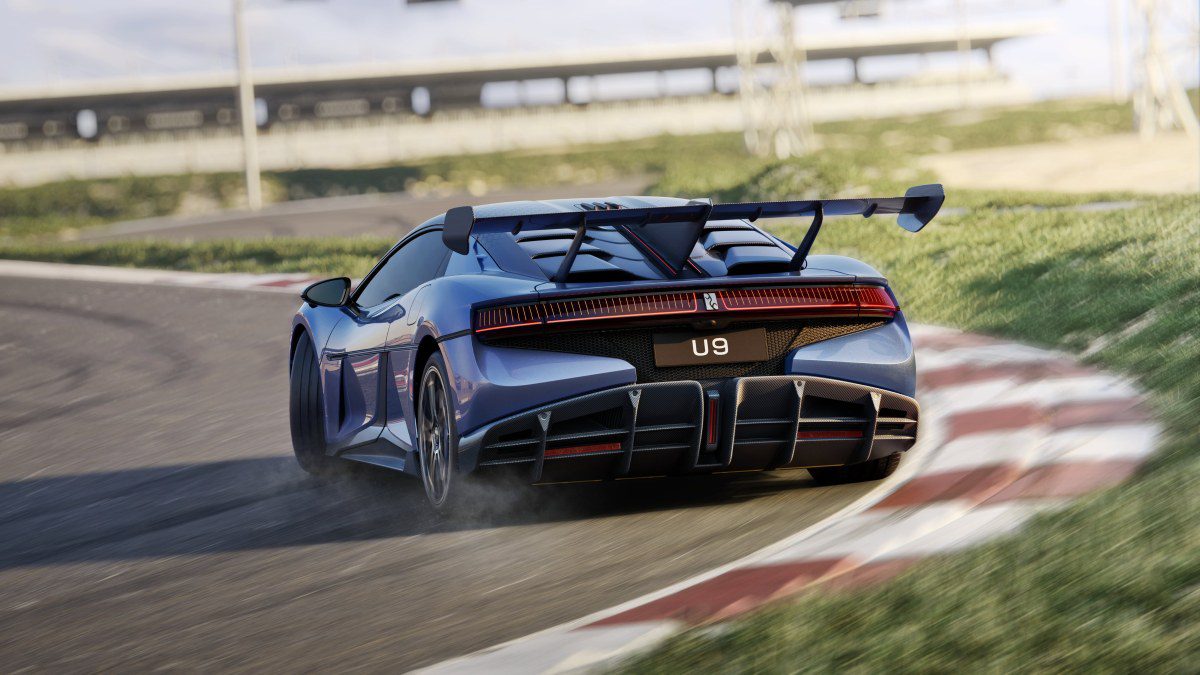

BYD launched its first electric supercar, the two-door U9, in 2023, under its Yangwang luxury brand.
A couple of months later, it was spotted being tested to reach speeds of 375 km/h, well above the original claim of 309 km/h. That version of the car had a 960 kW quad-motor powertrain, or almost 1,290 HP.
Then, in August this year, details from China revealed that the U9 supercar has a hypercar variant about to be launched, featuring a 2,200 kW of total power, thanks to a quad 555 kW motor powertrain.
The U9 Xtreme is faster than the current production model, which can accelerate from 0-100 km/h in just 2.36 seconds, with exact details yet to be confirmed.
The current car is equipped with an 80 kWh BYD blade battery pack that’s capable of delivering up to 450 km of CLTC range, which, of course, in the real world is likely to be closer to 370 km on the WLTP cycle – and a lot less at those speeds.
It’s also sitting on the company’s 1200 V architecture, which is likely to be carried over to future models.
The U9 has a starting price at the equivalent of more than $A230,000 and has been sold in showrooms across China. This Xtreme variant will be more than that, as only 30 examples are expected to be produced.
Having seen the U9 in person at Yangwang showrooms and on a test track in Shenzhen in May this year, the Xtreme variant certainly had modifications.
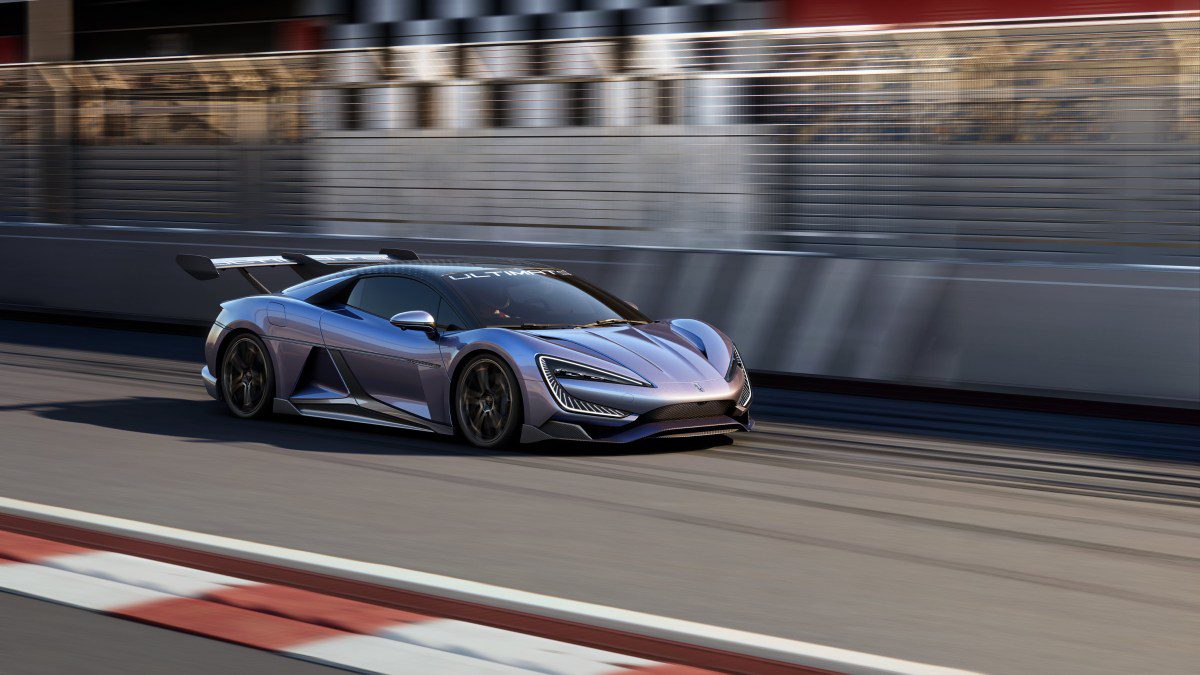

Even from that experience, it’s easy to see that this hypercar is designed to offer more than just a track experience, of course, now, breaking the speed and multiple lap records for the EV movement.
We hope to see some of this technology in other performance vehicles from BYD in future models, including the highly anticipated Denza Z, which is being tested ahead of its launch in 2026.
The Yangwang U9 Xtreme could just be the start of what manufacturers might do to push EV tech to its limit. This makes it quite an exciting time to be seeing this evolution happen before us.


Riz is the founder of carloop based in Melbourne, specialising in Australian EV data, insight reports and trends. He is a mechanical engineer who spent the first 7 years of his career building transport infrastructure before starting carloop. He has a passion for cars, particularly EVs and wants to help reduce transport emissions in Australia. He currently drives a red Tesla Model 3.
